UOB FinLab

Beyond the Chatbot: Hardwiring AI into Your Business

Featured Image For Beyond The Chatbot: Hardwiring Ai Into Your Business

In recent years, the conversation around artificial intelligence (AI) has focused on outputs like writing emails, generating content, and summarising documents. These individual productivity gains were valuable, but they only scratched the surface of AI’s potential.

In 2025, a clear shift emerged. Leading organisations began using AI less as a productivity shortcut and more as a support system for thinking, coordination, and decision-making. The focus moved from what AI can produce to how it can help organisations operate better – by improving workflow, decision quality, and team alignment. According to McKinsey, more than two-thirds of organisations now deploy AI across multiple business functions, while 23% report scaling agentic AI systems that can plan and execute multi-step workflows. This signals a shift away from isolated experimentation toward embedding AI into core operations.

2026 marks a turning point for SMEs with AI moving from a novelty to a necessity. The winners of this next phase will not just be using AI tools – they’ll be running on them.

Larger Organisations Are Using AI Differently

Employee Using Technology - Beyond The Chatbot: Hardwiring Ai Into Your Business

Large enterprises use AI to enhance decision-making and streamline operations.

They deploy AI to synthesise information across systems, flag risks, and surface insights that would otherwise take teams days to uncover. In decision-making, AI helps leaders test scenarios, compare trade-offs, and identify patterns, allowing people to focus on judgment rather than data gathering. For example, McKinsey reports that half of surveyed organisations now use AI in three or more functions, indicating that the technology is being integrated across finance, customer operations, and supply chains.

In decision-making, AI helps leaders test scenarios, compare trade-offs, and identify patterns, allowing people to focus on judgment rather than data gathering. McKinsey estimates that generative AI could automate 60 to 70% of the time employees currently spend on routine analytical and administrative tasks, allowing teams to redirect attention toward higher-value decisions.

AI also functions as a coordination layer. It routes tasks, monitors workflows, tracks handovers, and flags delays without requiring constant manual follow-ups. In this role, AI acts as connective tissue between teams, systems, and timelines, reducing friction and improving organisational alignment.

Crucially, these organisations embed AI into standard operating procedures (SOPs). Intelligence can be built into procurement reviews, finance checks, customer operations, and compliance processes. This ensures decisions are consistent, auditable, and scalable.

SMEs should not simply copy MNCs, but instead move beyond sporadic individual use. The true value of AI lies in embedding it into daily workflows and SOPs, transforming it from a personal productivity tool into an organisational capability that enhances how the business thinks and coordinates.


Where Many SMEs Are Today

Collaborative Meeting Session 2 - Beyond The Chatbot: Hardwiring Ai Into Your Business

Among SMEs, AI adoption has accelerated, but usage remains uneven. Many founders and employees use AI at an individual level – drafting messages, brainstorming ideas, or organising tasks. These applications save time, but they rarely change how the business operates.

When AI remains personal rather than organisational, its impact is limited. Knowledge stays fragmented, processes depend heavily on individuals, and decision-making remains manual and reactive. This gap helps explain why many SMEs see AI delivering incremental efficiency gains, but not yet driving structural changes in how their businesses operate.

The issue is not the technology itself. It is how and where it is applied.

How SMEs Can Adapt Without High Costs

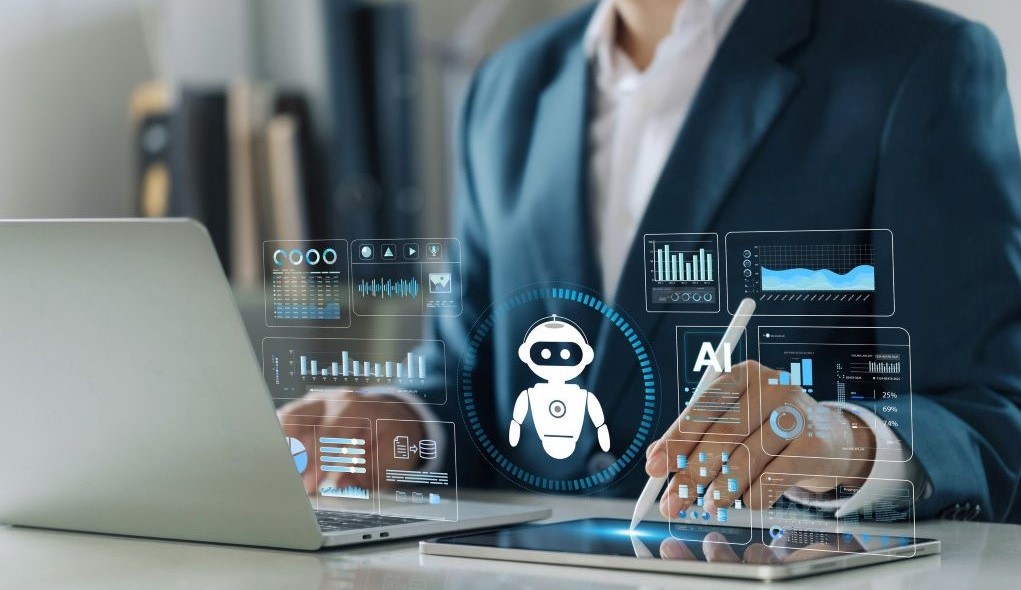
Employee Working With Ai 1 - Beyond The Chatbot: Hardwiring Ai Into Your Business

SMEs need to see exactly where these tools plug into their daily grind in order to move from theory to reality. Here are three high-impact, low-cost scenarios where AI transforms standard workflows into competitive advantages.

  • Decision support: SMEs often lack a dedicated strategy department. AI fills this gap by acting as a sounding board for major commercial moves. An example of this would be in bid and tender analysis, where SMEs can feed the AI the Request for Proposal alongside their internal costs before submitting a major contract bid. The AI identifies hidden risks and suggests areas where the pricing might be uncompetitive based on market trends. It turns a “gut feeling” bid into a data-backed strategy.
  • Process standardisation: Standard Operating Procedures are often ignored because they are buried in PDFs. AI can bring them to life at the point of execution, such as in an automated invoice & compliance triage. As vendor invoices or project reports arrive, a simple AI script scans them against your company’s compliance checklist. Instead of a human manually checking 50 documents, the AI flags those with missing data. This reduces human errors and frees up time for officers to do more high-value work.

Coordination: Tasks often get lost in email chains in lean teams. Lightweight AI agents can manage the hand-off between departments, like during post-sales customer onboarding.   Once a sale is closed, an AI agent automatically creates a project plan, assigns tasks to the technical team based on their current load, and drafts a personalised welcome email for the client. It eliminates lag whereby projects sit idle between sales and operations. The AI monitors the timeline and pings the manager only if a milestone is missed, keeping the team focused on work rather than status updates.

These applications do not require vast infrastructure. They require intentional design: clarity on processes, roles, and decision points.

Building an AI Adoption Ecosystem

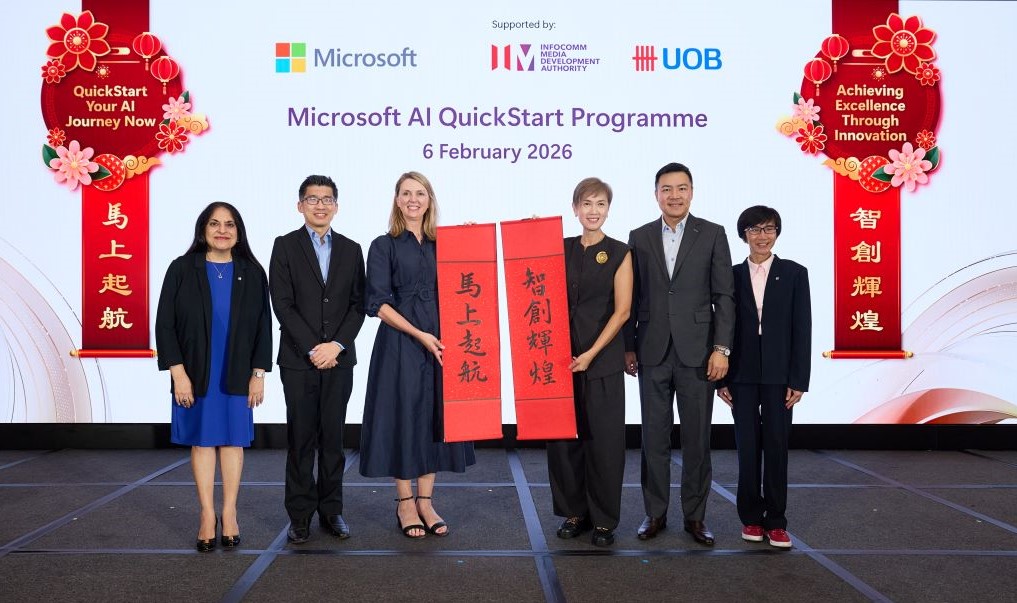
Microsoft Ai Quickstart Programme - Beyond The Chatbot: Hardwiring Ai Into Your Business

Singapore has positioned AI as a national economic capability, evolving its National AI Strategy to include generative and agentic AI while shaping regional governance through the ASEAN Guide on AI Governance and Ethics. To drive this, the government committed S$1 billion in Budget 2024 to enhance infrastructure, talent, and enterprise adoption.

Key initiatives, like Microsoft’s AI QuickStart programme for SMEs, help these companies to rapidly deploy practical, enterprise-ready AI solutions.As AI becomes integral to business operations, adoption increasingly relies on ecosystem support. For SMEs, this support is critical to managing technology change, organisational redesign, and workforce upskilling.

Turning Ecosystem Support into Organisational Capability: SME Elevate

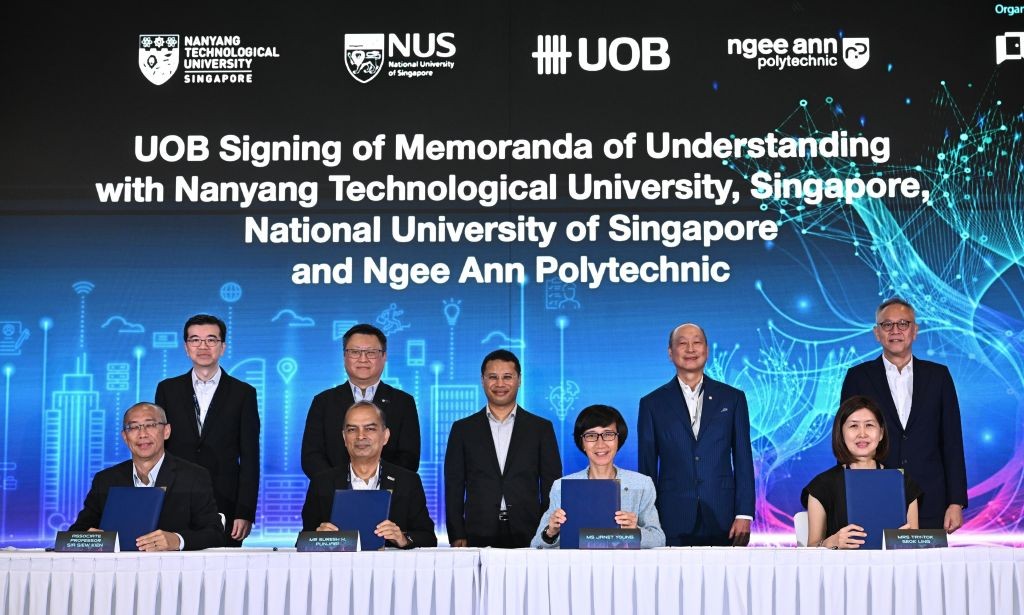
Sfqb Signing - Beyond The Chatbot: Hardwiring Ai Into Your Business

UOB FinLab’s SME Elevate Programme, part of the SkillsFuture Queen Bee initiative, works in tandem with many nationwide initiatives like the IMDA Digital Leaders Programme to help SMEs develop practical capabilities across AI, digitalisation, and sustainability.

The shared vision here is to help SMEs build AI capabilities effectively across the organisation. SME Elevate focuses on equipping business leaders with a clear understanding of how AI has evolved, where it creates real value, and how it can be applied to everyday operations. In parallel, the IMDA Digital Leaders Programme supports companies in building internal digital teams and developing long-term digital roadmaps to sustain adoption. Together, these initiatives help SMEs align leadership understanding with organisational execution, ensuring AI adoption translates into lasting operational change.

Through structured learning programmes, mentorship, and peer exchange, SMEs gain clarity on moving from experimentation to integration. They learn how to redesign workflows, decision-making, and team practices to embed AI effectively. One such programme under SME Elevate is the upcoming AI and Machine Learning Begins with Me, which will be delivered in collaboration with the National University of Singapore in April 2026.

These programmes reflect a broader philosophy: transformation happens faster when businesses learn together, guided by practitioners who understand operational constraints.

Looking Ahead: From Tools to Operating Models

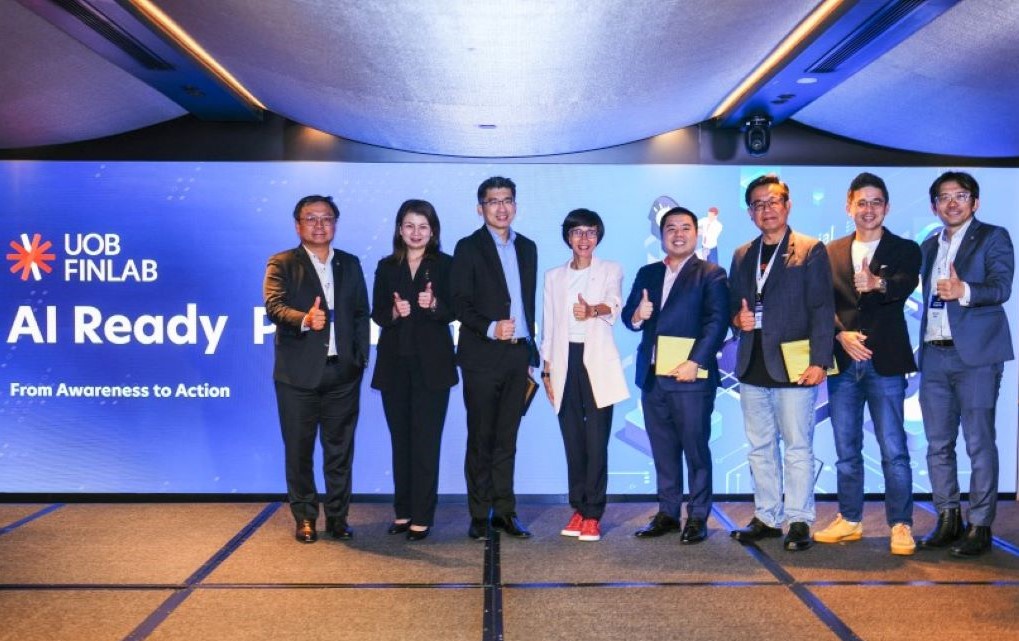
Ai Ready Programme - Beyond The Chatbot: Hardwiring Ai Into Your Business

As 2026 unfolds, the distinction between experimenting with AI and operating with AI will become clearer. The businesses that pull ahead will not necessarily have the most advanced tools, but those that embed AI into how they think, decide, and coordinate work.

AI’s next chapter is organisational. It supports better decisions, smoother workflows, and more resilient teams. For SMEs, this shift represents an opportunity: to build scale without complexity and grow capability without losing agility.

SMEs looking to build practical, organisation-level AI capabilities can register for UOB FinLab’s AI Ready Programme. The programme offers 1-on-1 Tech Advisory Clinics and partially funded Proof-of-Concept (POC) sprints, helping businesses move from awareness to action by understanding, testing, and applying AI in real business contexts.

UOB FinLab remains committed to supporting SMEs through this transition, not as a technology provider, but as a partner in capability-building. The future of AI adoption will be defined not by individual productivity gains, but by how well businesses learn to work and think together.

Stay up to date by following us on LinkedIn and subscribe to our newsletter.

Beyond the Chatbot: Hardwiring AI into Your Business

Featured Image For Beyond The Chatbot: Hardwiring Ai Into Your Business

Online programme

Start Smart Programme

Designed for business owners to enhance their digital capabilities through practical learning, this programme takes businesses to the next level.

Online programme

Start Smart Programme

Designed for business owners to enhance their digital capabilities through practical learning, this programme takes businesses to the next level.

Don't miss out on the latest Digitalisation and Sustainability trends, insights and more!

Bridge ideas and innovation, subscribe to the FinLab Connect now!