



UOB FinLab

5 Questions With: David Ng, Co-Founder of ISOTeam

Featured Image For 5 Questions With: David Ng, Co-Founder Of Isoteam

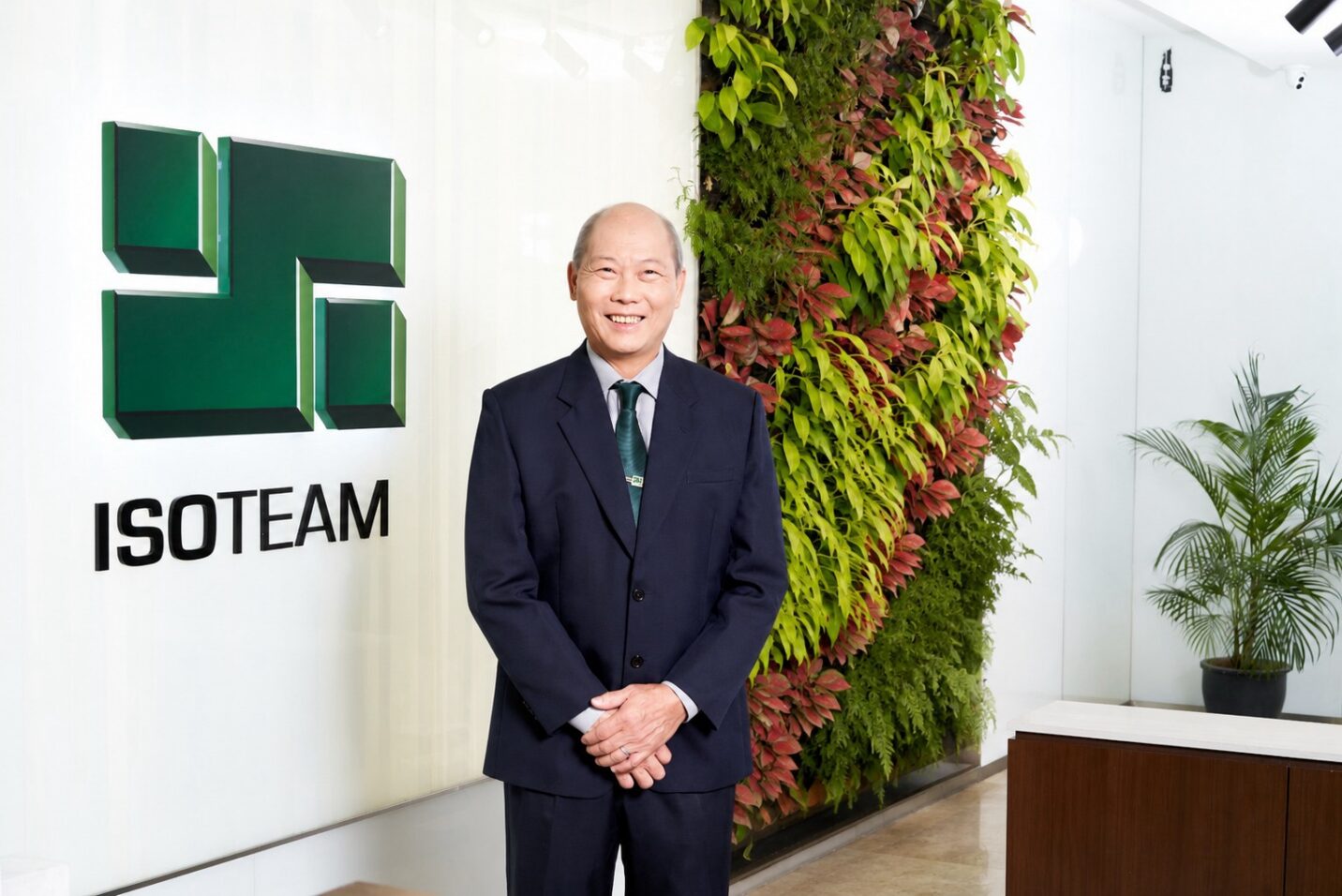
David Ng, Chairman & Co-Founder, ISOTeam
In Singapore’s building maintenance and estate upgrading industry, SGX listed company ISOTeam stands out as a pioneering, eco-conscious leader. Co-founded in 1998 by Executive Chairman Mr. David Ng, the company has successfully undertaken over 950 refurbishment projects for nearly 7,700 buildings. Yet, despite these achievements, David is not one to rest on legacy practices. He understands that the built environment sector is constantly changing and acutely vulnerable to today’s macroeconomic headwinds — such as volatile energy prices and tightening regulatory demands for sustainability. This backdrop is reflected in the UOB Business Outlook Study 2026, which highlights that more than eight in 10 businesses now cite energy management as a top priority to combat market volatility, with 42% specifically focusing on optimising resource usage to strengthen cost resilience. To survive in this economy, businesses like ISOTeam are under immense pressure to drive efficiency through digital solutions. However, the same study also points to a critical roadblock: 39% of businesses cite talent and capability constraints as key barriers to successful technological adoption. Recognising the importance of equipping his workforce with adequate knowledge and skills, David continuously upskill his operational teams in practical sustainability frameworks and has enrolled a class of 20 C-suite executives in the Empowering Your Workforce with GenAI and Sustainability programmes to build long-term, sustainable agility. This proactive commitment to workforce transformation directly bridges the capability gap, ensuring that ISOTeam upholds its green edge alongside its longstanding reputation for quality, speed, and safety.

5 Questions with David:

Data Analysis 1 - 5 Questions With: David Ng, Co-Founder Of Isoteam

1. What first pushed you to start digitalising your business and upskill? Was it growth, pressure, or a specific moment that made you realise things had to change?

With close to 800 employees, managing complex, multiple sites for our core Repairs & Redecoration and Addition & Alteration projects, operational complexity is our daily reality.

If there is one thing I have learned in this industry, it is that change is the only constant.

First, we realised that the rise of digital technologies like AI can greatly help us to drive operational efficiency in today’s macroeconomic climate where the global construction industry is improving at just one-fifth the rate of the overall economy. This is an opportunity to innovate and find solutions to make our business more efficient and future-proof.

Second, we are navigating an ever-changing regulatory landscape where sustainability reporting is fast becoming a decisive factor for competitiveness. As a listed company and a leading player entrusted with large-scale projects by town councils and government bodies, staying ahead of the latest regulations is fundamental to our accountability.

This is also why we believe upskilling is extremely important for us to stay relevant. Therefore, it is crucial to equip our people with knowledge of the latest digital tools to improve our margins, while keep them current on evolving compliance requirement.

Analytic 1 - 5 Questions With: David Ng, Co-Founder Of Isoteam

2. What motivated you to invest so heavily in training 20 of your top C-suite leaders in Generative AI?

We always believed digitalisation cannot be a bottom-up initiative alone, it requires a mindset shift at the leadership level. Our executives constantly grapple with project delays, budget overruns, safety hazards, fragmented data, and severe labour shortages. Coordinating multi-disciplinary works across thousands of sites creates massive administrative bottlenecks.

By enrolling 20 of our C-suite leaders in the Empowering Your Workforce with GenAI programme, we wanted to give our key decision-makers a practical, hands-on understanding of how AI directly solves these challenges. For example, AI can drastically streamline our workflows by using predictive analytics to forecast project timelines, track historical data, flag compliance issues, and adjust schedules proactively to mitigate costly overruns. It further reduces administrative bottlenecks through Natural Language Processing, which automates daily site documentation and generates project status reports.

More importantly, when top management actively pilots and champions new technology, it sets a powerful precedent. It removes the fear of technological failure and shifts our culture from viewing AI as an abstract IT experiment to an accessible, everyday capability. That is the absolute bedrock which makes workforce transformation continuous and sustainable.

3. You attended our joint Ngee Ann Polytechnic and UOB FinLab’s Sustainability Reporting and Carbon Management courses. How did these courses elevate your approach to sustainability, and how does ISOTeam balance this with commercial priorities?

At the heart of ISOTeam’s business philosophy is《饮水思源》, which translates to “when you drink water, remember its source and be grateful”. For us, we are firm believers in remembering our roots, giving back to our community, and conserving the environment we work in. While we were already integrating green methodologies in our operations and driving renewable energy installations to support Singapore’s 2030 solar goals, the joint UOB FinLab and Ngee Ann Polytechnic courses helped to translate  these broad green ambitions into structured, actionable frameworks.

The training enables us to use practical tools to navigate the complexities of Singapore’s Carbon Pricing Act and accurately master the tracking of our Scope 1, 2, and 3 emissions. More importantly, it also ensured that our team is fully updated on the latest climate policies and reporting standards, such as the GRI and ISSB frameworks- which are increasingly critical for listed companies 

When it comes to balancing these sustainability efforts with commercial priorities, it ultimately boils down to operational efficiency. We continuously refine our propriety model of seamlessly integrated control systems to ensure that our eco-friendly practices actually translate into competitive pricing and tangible value for our clients. In fact, sustainability is not a trade off against profitability. When implemented effectively, it optimises resource use and builds long-term business resilience.

4. Looking back, what was one digital decision that didn’t go as planned, and what did it teach you about leading change?

Corporate Meeting 7 - 5 Questions With: David Ng, Co-Founder Of Isoteam

Like many SMEs trying to digitalise quickly, we initially fell into the misconception that digital transformation was simply about adopting the latest technologies. We invested heavily in new project management and data tracking platforms, expecting to see immediate productivity boosts. However, we quickly realised that without the right skills and people in place, even the best technological tools remain severely underutilised.

We saw firsthand that if you invest in new systems without equipping your workforce with the practical knowledge and skills to apply them to our core operations, our efforts will remain fragmented

That is why we now prioritise upskilling our people first, before rolling out massive system overhauls. Only then can a business successfully translate digitalisation into a continuous, adaptable capability. Technology is only as powerful as the workforce using it. Put practical knowledge in place and digitalisation becomes a force multiplier.

5. If you had to turn your experience into a simple strategy playbook, what are the top three rules you’d give other SME founders who want to empower their workforce with GenAI?

Our first rule is simple: Do not isolate learning. Transformation almost always fails when it sits in a silo. You have to upskill your operational teams to handle technical frameworks like sustainability reporting, while simultaneously train your management teams to understand GenAI, so that they can drive the high-level strategy and support the operational teams in executing it.

My second rule is to solve real problems, not theoretical ones. Don’t encourage your teams to learn AI just for the sake of it. You have to focus closely on areas where digital tools can solve real, pressing business challenges. Encourage your teams to identify a specific administrative bottleneck or an operational inefficiency, then empower them to apply these new digital tools directly to solve that issue, allowing them to see immediate value and gain confidence with AI.

Finally, my last rule is to actively leverage the ecosystem support. Training a legacy business is costly and resource-heavy, but you do not have to figure it out alone. Tap into structured programmes like the UOB SME Elevate Programme, and leverage the targeted skills advisory, industry mentorship, and ecosystem offered by UOB FinLab. Building these critical capabilities becomes much more manageable and sustainable for your business when you have the right resources.

Sustainability Getty Image - 5 Questions With: David Ng, Co-Founder Of Isoteam

ISOTeam’s journey underscores a vital lesson for today’s businesses: true transformation goes far beyond software adoption, it is fundamentally rooted in upskilling your people. Navigating the dual demands of rapid digitalisation and stringent sustainability reporting can feel like an impossible tightrope for traditional businesses. However, David’s experience proves that the most resilient strategy is empowering employees through upskilling. By leveraging the expertise and support ecosystem offered by UOB FinLab, SME leaders can confidently embrace digitalisation and guide their workforce into a resilient, sustainable future.

Stay up to date by following us on LinkedIn and subscribe to our newsletter.

5 Questions With: David Ng, Co-Founder of ISOTeam

Featured Image For 5 Questions With: David Ng, Co-Founder Of Isoteam

Online programme

Start Smart Programme

Designed for business owners to enhance their digital capabilities through practical learning, this programme takes businesses to the next level.

Online programme

Start Smart Programme

Designed for business owners to enhance their digital capabilities through practical learning, this programme takes businesses to the next level.

Don't miss out on the latest Digitalisation and Sustainability trends, insights and more!

Bridge ideas and innovation, subscribe to the FinLab Connect now!